
Navigating Your Cybersecurity Career in 2025: A Strategic Blueprint
Estimated reading time: 6 minutes
Key Takeaways
- The cybersecurity skills gap is creating unprecedented demand for specialized, certified talent in niche areas.
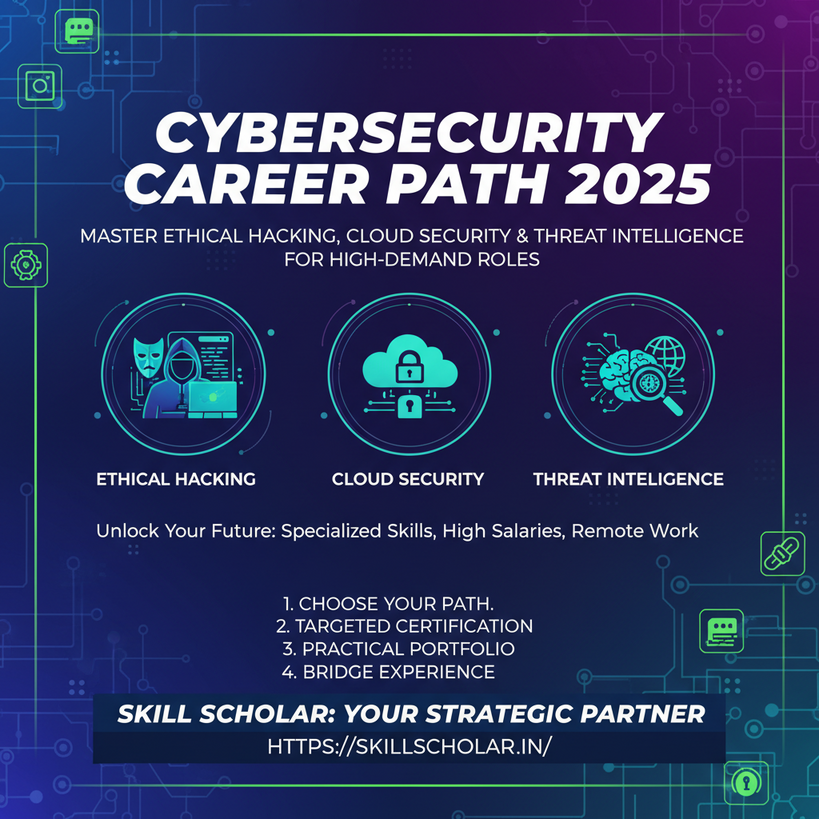
- Three of the most lucrative paths for 2025 are Ethical Hacking, Cloud Security, and Threat Intelligence.
- Hands-on cybersecurity certification and a practical portfolio are your most valuable career currency.
- The SOC analyst role remains a critical foundational gateway into the industry.
- Strategic, continuous learning is non-negotiable for success in the evolving cybersecurity job market 2025.
Table of Contents
- The 2025 Cybersecurity Job Market: An Unprecedented Opportunity
- Path 1: The Ethical Hacker (Penetration Tester)
- Path 2: The Cloud Security Specialist
- Path 3: The Threat Intelligence Analyst
- The Foundational Gateway: The SOC Analyst Role
- Building Your 2025 Career Launchpad: Certification & Experience
- Conclusion: Your Future in Cybersecurity Starts with Strategic Learning
The digital landscape is not just evolving; it’s under constant siege. As we move into 2025, the demand for skilled cybersecurity professionals has transcended mere growth—it has become a critical imperative for global business continuity. With cyber threats growing in sophistication and frequency, organizations are scrambling to fortify their defenses, creating a wealth of opportunities for those with the right skills. This guide, crafted from the frontline expertise at Skill Scholar, maps the most lucrative and in-demand cybersecurity career paths for 2025, focusing on the trifecta of ethical hacking, cloud security, and threat intelligence. Whether you’re a newcomer seeking direction or a professional aiming to pivot, understanding this landscape is your first step toward a resilient and rewarding career.
The 2025 Cybersecurity Job Market: An Unprecedented Opportunity
Before diving into specific roles, it’s crucial to grasp the macro environment. The cybersecurity skills gap is projected to widen further, with millions of positions remaining unfilled globally. This isn’t just a shortage of bodies; it’s a shortage of specialized, certified talent. Companies are no longer looking for general IT professionals who dabble in security. They are actively recruiting for niche experts who can combat specific threat vectors. This shift means that targeted training and certification, like the programs offered by Skill Scholar, are your most valuable currency. Salaries continue to climb, remote work is standard, and career advancement can be rapid for those who demonstrate proven, practical skills.
Path 1: The Ethical Hacker (Penetration Tester)
Often glamorized in media, the role of an ethical hacker is fundamentally that of a professional skeptic. Your mission is to think like an adversary to find vulnerabilities before the bad actors do.
Core Skills & Training for 2025:
- Advanced Technical Proficiency: Mastery of tools like Metasploit, Burp Suite, and Nmap is just the start. In 2025, you’ll need deep knowledge of API security, mobile application penetration testing, and IoT device hacking.
- Certifications That Matter: The Offensive Security Certified Professional (OSCP) remains the gold standard for proving hands-on ability. Complement this with web-specific certs like the Web Application Penetration Tester (GWAPT) or the new breed of cloud-focused offensive certifications.
- Soft Skills: Your ability to write clear, actionable reports that translate technical flaws into business risk is what separates a good tester from a great one. Communication is key.
At Skill Scholar, we structure our ethical hacking training around these exact competencies, moving beyond theory to immersive, lab-based environments that simulate real-world breach scenarios.
Path 2: The Cloud Security Specialist
As migration to AWS, Azure, and Google Cloud Platform accelerates, so does the attack surface. The cloud security specialist is the architect and guardian of this new frontier.
Core Skills & Training for 2025:
- Platform-Specific Expertise: Deep, hands-on experience with the native security tools of at least one major cloud provider (e.g., AWS Security Hub, Azure Security Center) is non-negotiable.
- Understanding of Shared Responsibility: You must expertly navigate the division of security of the cloud (provider’s duty) and security in the cloud (your client’s duty). Misconfiguration is the leading cause of cloud breaches.
- DevSecOps Integration: Security must be baked into the CI/CD pipeline. Knowledge of Infrastructure as Code (IaC) security tools like Terraform and Checkov is highly sought-after.
Our cloud security specialist curriculum at Skill Scholar is built by practitioners, ensuring you learn the precise configuration, identity management, and data protection strategies used by leading enterprises today.
Path 3: The Threat Intelligence Analyst
This role is the strategic brain of the security operation. Rather than waiting for an alert, threat intelligence analysts proactively hunt for clues about emerging campaigns and threat actors targeting their industry.
Core Skills & Training for 2025:
- Analytical Mindset: You must correlate data from dark web monitoring, threat feeds, internal logs, and geopolitical events to form a coherent picture of risk.
- Technical & Contextual Knowledge: Understanding malware indicators of compromise (IOCs) is important, but so is knowing why a particular hacker group might target healthcare or financial services.
- Communication & Briefing Skills: You translate complex threat data into actionable intelligence for both technical teams and executive leadership, informing business decisions.
Becoming a proficient threat intelligence analyst requires training in specific frameworks and platforms. Skill Scholar’s programs focus on practical analysis, teaching you to use real tools to track, attribute, and mitigate advanced persistent threats (APTs).
The Foundational Gateway: The SOC Analyst Role
For many, the journey into cybersecurity begins in a Security Operations Center (SOC). The SOC analyst role is the boot camp of the industry, providing unparalleled exposure to real-time alerts and incidents across network security perimeters.
This position is critical for building foundational skills in log analysis, incident response triage, and security tool operation. It’s the perfect proving ground and a common entry point we prepare students for at Skill Scholar, often through guided cybersecurity internship simulations within our training platform. Excelling here can fast-track you to more specialized paths like threat hunting or digital forensics.
Building Your 2025 Career Launchpad: Certification & Experience
In the competitive cybersecurity job market 2025, a structured approach is essential. Here is your actionable blueprint:
- Choose Your Path: Align your interests with one of the core domains above. Do you enjoy breaking things (ethical hacking), building secure systems (cloud security), or solving strategic puzzles (threat intelligence)?
- Pursue Targeted Certification: Generic IT certs won’t suffice. Invest in recognized, hands-on credentials like OSCP, CCSP (Certified Cloud Security Professional), or CTIA (Certified Threat Intelligence Analyst). Skill Scholar’s cybersecurity certification pathways are designed to prepare you specifically for these exams and, more importantly, for the jobs they unlock.
- Build a Practical Portfolio: Employers want proof. Use lab environments (like those we provide) to document your work: write-ups of penetration tests, secure cloud architecture designs, or sample threat intelligence reports.
- Bridge the Experience Gap: If you’re new, seek out cybersecurity internship opportunities, contribute to open-source security projects, or tackle challenges on platforms like Hack The Box. This demonstrates proactive skill application.
Conclusion: Your Future in Cybersecurity Starts with Strategic Learning
The trajectory for an information security career has never been more promising. The roles of ethical hacker, cloud security specialist, and threat intelligence analyst represent the vanguard of defense in our digital age. Success, however, depends on more than just interest; it requires a commitment to continuous, specialized learning and hands-on practice.
At Skill Scholar, our mission is to be your strategic partner on this journey. We don’t just provide information; we provide a structured, expert-led pathway to mastery in these high-demand domains. Our courses are continuously updated for the 2025 landscape, ensuring you learn the tools, techniques, and methodologies that employers are hiring for right now.
Take control of your cybersecurity career path today. Explore the in-depth, practitioner-designed training programs at Skill Scholar and transform your potential into the expertise that the world urgently needs.